≡ MENU
NAVIGATION
×
  • Home
  • Login
  • Career Development
    • Career Development
    • Continual & Lifelong Learning
    • Lifelong Employability
  • EPL Career Forms
    • Multidimensional Careers
    • EPL – A New Approach
    • EPL Motivational Profiles
    • EPL Efficacies
    • EPL & T-Shaped
  • EPL Development
    • Entrepreneurialism & E Development
    • Professionalism & P Development
    • Leadership & L Development
  • Self-Directed Coaching
    • Self-Coaching Tools
    • Career Skills
  • Glossary
  • FAQ
  • Your Survey Status
NTU Career Aspiration System
  • 1. What is University-wide Career Aspiration System 2017?
    • The Career Aspiration System (CAS) is an official University-wide survey that allows us to better understand your career aspirations.  Information from this survey is very important as it allows us to plan activities and programs to prepare you better for your future career endeavors.

  • 2. Is the information that I provide confidential? Will it be shared with other people?
    • NTU guarantees that all responses will be treated confidentially.  All survey data will be kept secure by NTUitive Pte Ltd. Any data provided to the researchers assisting with the analysis will not contain any information that could be used to identify an individual participant. Publications and presentations based on the data will not contain information that could be used to identify an individual.


  • 3. Why should I take this survey?
    • Your input is highly valued because it provides us with insight into your career aspirations and allows us to plan activities or programs that greatly enhance the attractiveness of our graduates to potential employers.


  • 4. Is my participation in this survey completely voluntary?
    • Yes.  Your participation is completely voluntary and you can withdraw from the study at any time with no penalty.  However, you will only be eligible for the lucky draw if you complete the survey.


  • 5. How do I participate in the survey?
    • You will receive a personal invitation (with the title “NTU Career Aspiration System (CAS) with Feedback 2016”) from Dr. Lim Jui, CEO of NTUitive Pte Ltd, which will contain a link to the survey. 

  • 6. I never received an invitation for this study.
    • All NTU students are eligible to participate in the Career Aspiration System (CAS).  If you have not received the invitation email, please contact the survey operation office at +(65) 6794 3855 or send an email to ntuitiveinfo@ntuitive.sg for assistance. 

  • 7. I can't see the survey form!
    • The form is designed for Internet Explorer 7.0 and above, Safari (Mac), and Firefox v3.5 and above. Please ensure that you are using one of the supported browsers.


  • 8. My page is stuck! My page isn’t loading! Should I do it from the start again?
    • Your responses are automatically saved every time when you click on the 'Back' and 'Next' buttons. Hence, when you restart the survey, it'll be from the last saved page.

      If you need further assistance, please contact the survey operation office at +(65) 6794 3855 or send an email to ntuitiveinfo@ntuitive.sg.


  • 9. Can I see the results of the survey?
    • No, the results are kept confidential. However, you will see the benefits in the programs that NTU will develop because of your inputs.


  • 10. I haven't received the link to my personalized webpage, after completing the survey!

    • 1.


      The system might take some time to process your request as we may encounter heavy traffic on the system. Please wait about 24 hours.

      If after 24 hours, you have still not received your access, please proceed to do the following:


      2.


      Please access your survey again (from the survey invitation email) and make sure you selected the option to get your results ('I would like to see my results (a separate email will be sent to you to access your personalized webpage)'). 


      3.

      If the option is ticked, then try to resubmit your survey again. If the option is not ticked, then tick it and submit your survey.


      4.If you still do not receive your webpage link, please contact the survey operation office at +(65) 6794 3855 or send an email to ntuitiveinfo@ntuitive.sg


  • 11. I have some feedback!
    • Do you have suggestions to improve the NTU CAS? Please leave your feedback, comments, and suggestions here.


  • 12. What is the survey result for NTU Career Aspirations Survey 2015-16
    • Summary of NTU Career Aspirations Survey 2015-16 
       
      The NTU Career Aspiration Survey (CAS) has been conducted since 2010. The main aim of the survey was to understand, analyse and monitor students’ career motivations, efficacies and intents towards entrepreneurship in relation to competing career choices in the professional and leadership fields. In 2015, 4,754 NTU students (comprising 3,909 undergraduates and 845 postgraduates) provided valid responses.

      Some of its findings are summarised below: 
       
      • 7-9% of NTU students intend to pursue entrepreneurial careers upon graduation, 68-71% prefer professional careers, and 21-25% prefer leadership careers. Figure 1 shows these findings compared with past years’ results (See Figure 1). 
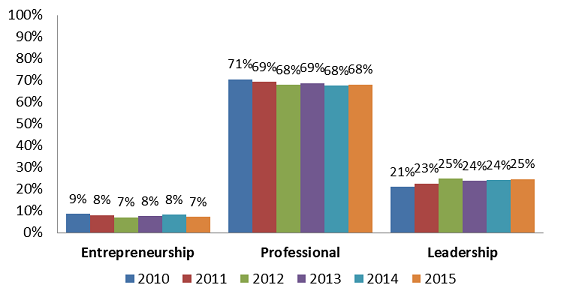
      Figure 1 : Career aspiration of NTU students immediately upon graduation
       
      • There is substantial entrepreneurial potential in NTU that can be nurtured:
      •  About one-third of respondents report having engaged in at least two entrepreneurial activities out of a checklist of nine possible activities.
      • For students who do not wish to pursue entrepreneurial careers immediately upon graduation, a quarter (25%) of them intend to start a business within ten years upon graduation. (See Figure 2).
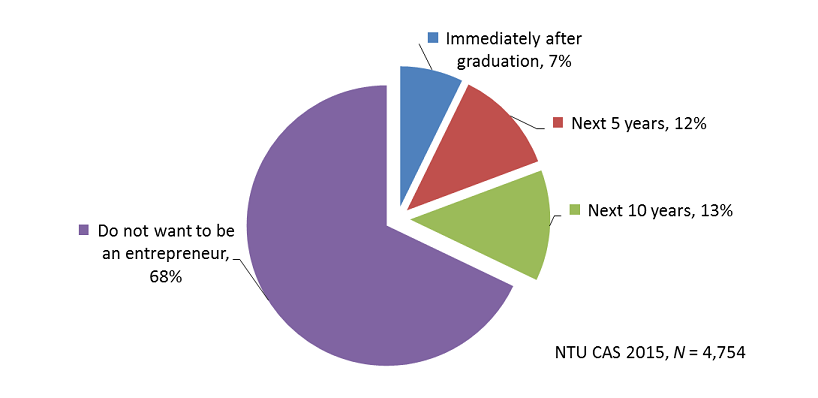
      Figure 2 : Intention to start a business by future timeframe
       
      • Comparing across the four main colleges, College of Engineering has the highest proportion of entrepreneurially motivated students (54%) followed by the Nanyang Business School (NBS) (49%), College of Science (37%), and College of Humanities and Social Sciences (HASS) (33%) (See Figure 3).
      • PhD students from STEM disciplines dominate the rankings for entrepreneurial motivation. Following Engineering (56%), Science (46%) and IGS students (41%) reported a higher level of entrepreneurial motivation in comparison to their HASS (32%) counterparts [note: NBS PhD student sample was too small to report].
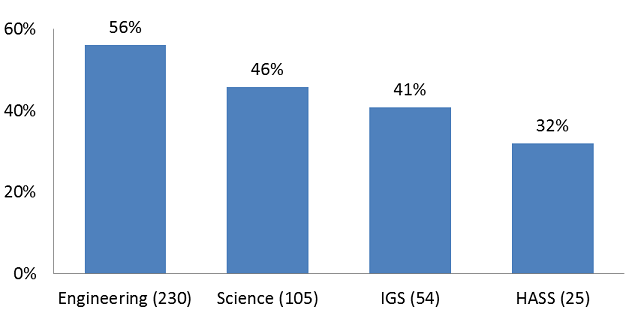
      Figure 4. Entrepreneurial Aspiration of PhD students by NTU Colleges
      • Consistent with the 2012, 2013, and 2014 NTU CAS Reports, Figure 5 shows that the more students were exposed to activities related to a particular career, the more they aspired towards that particular field. For entrepreneurship in particular, it was found that continued exposure to entrepreneurial activities was needed to maintain one's career aspirations (comprises intent, motivation, and efficacy) in this area.
      • The study found that students that were most multidimensional in their career motivations (i.e. with highest entrepreneurial, professional and leadership scores) were the most “career adaptable”. In contrast, students that were highest in the only professional and leadership motivations tended to be less adaptable. This reinforces the view that exposure to entrepreneurship better prepared students to be more adaptable in their careers.
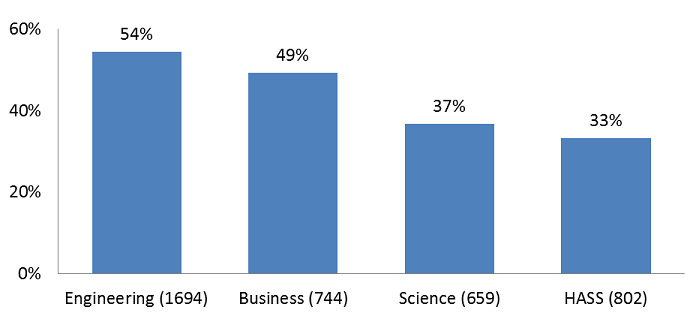
      Figure 3. Entrepreneurial Aspiration of undergraduate students by NTU Colleges
      • PhD students from STEM disciplines dominate the rankings for entrepreneurial motivation. Following Engineering (56%), Science (46%) and IGS students (41%) reported a higher level of entrepreneurial motivation in comparison to their HASS (32%) counterparts [note: NBS PhD student sample was too small to report].
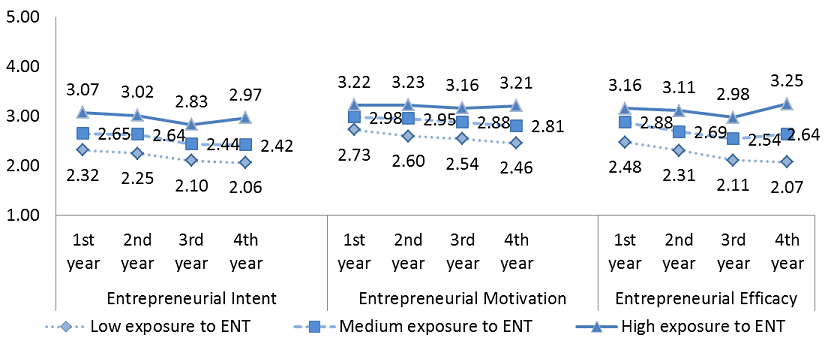
      Figure 5.Changes in NTU students' entrepreneurial career aspiration over time
       
      • The 2014 and 2015 NTU CAS studies found that students who were most "multidimensional" in their career motivations (i.e. with highest entrepreneurial, professional and leadership scores) were the most “career adaptable”, and perceived themselves to be more employable. In contrast, students lowest in R, P & L motivations deemed themselves least adaptable and employable (see Figure 6).
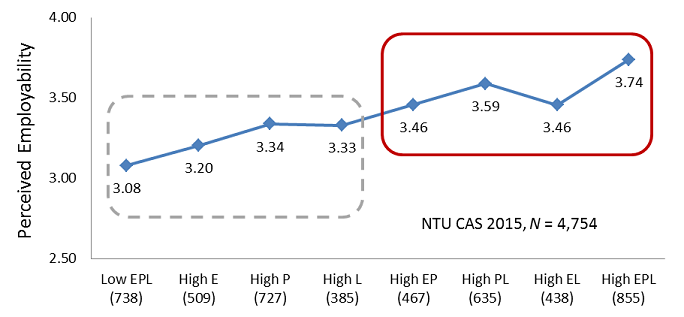
      Figure 6. Perceived Employability & EPL Profiles
       
      For more information on the NTU CAS, please email ntuitiveinfo@ntuitive.sg.


  • 13. Why do I need the CAS feedback?
    • You will need the CAS feedback if you are interesting to know more about how you can better prepare for the future world of work. It is different from the existing career interest survey that only points to your vocational or professional interests and your suitability for specific jobs. CAS is based on the EPL career theory which is about careers in a multidimensional space.


  • 14. How is CAS feedback different from other career interest tests?
    • Most career interest surveys are based on the RIASEC (Realistic, Investigative, Artistic, Social, Enterprising and Conventional) model. Such surveys are useful for choosing your major field of study and the survey is best taken before you enter a tertiary institution. At the tertiary level, you acquire deeper knowledge and invest more time and resources to specialize in your chosen field of study. CAS feedback goes beyond the usual career interest surveys to give you more information about the type of tasks that you might like or dislike to do in the real world of work and these tasks are related to the broad or transferable skills that organisations depend on to grow and stay in competition. Most workplaces and organisations do not hire people based on only their professional or technical skills. The soft or broad or transferable skills are not learnt in formal lectures. Once you know you have an interest in these alternative career spaces, you can develop them as early as possible because you will need to the exposure and experiences.


  • 15. I am more interested in being a Professional. I am not inclined to do the Entrepreneurial or Leadership tasks as I do not have the right personality traits. What will happen if I just stay as a Professional?
    • Most career interest surveys are based on the RIASEC (Realistic, Investigative, Artistic, Social, Enterprising and Conventional) model. Such surveys are useful for choosing your major field of study and the survey is best taken before you enter a tertiary institution. At the tertiary level, you acquire deeper knowledge and invest more time and resources to specialize in your chosen field of study. CAS feedback goes beyond the usual career interest surveys to give you more information about the type of tasks that you might like or dislike to do in the real world of work and these tasks are related to the broad or transferable skills that organisations depend on to grow and stay in competition. Most workplaces and organisations do not hire people based on only their professional or technical skills. The soft or broad or transferable skills are not learnt in formal lectures. Once you know you have an interest in these alternative career spaces, you can develop them as early as possible because you will need to the exposure and experiences.


  • 16. When is a good time to do the CAS survey? Should I do it in my final year of study?
    • The ideal time to take the CAS survey is during your first year. This is so that you have enough time during the remaining years at your tertiary institute to develop skills for more than one career path for more career opportunities.


  • 17. How about teamwork skills which are also important? Why are these not mentioned in the E and L dimensions?
    • Teamwork skills are part of the Leadership domain which includes dealing with people and relationship building at work. You can read about student leadership which includes peer leadership and team leadership under “Leadership and Leadership Development”. Also check out “Future Careers & Employability”.


  • 18. What type of jobs will be phased out so that I can prepare myself better?
    • The types of jobs you may need to avoid are those with repetitive tasks or labour intensive jobs which will be replaced with automation capabilities and machine learning technologies across all industries. Read more here: EPL and T-Shaped Metaphor & Critical Skills for the Future Workplace.


  • 19. What a ways I can ensure that I do not get outdated?
    • You can keep your self updated and relevant in line with the technological changes that will take place in your industry or profession. Build your professional networks and sign up for courses and programs offered by your professional association. You can acquire the broad skills from the E and L dimensions and consider alternative paths if you need to. See “Entrepreneurial Development” and “Leadership Development”.


  • 20. With all the technological changes happening, will the IT industry become saturated?
    • The best way to find out is to read up on the industry developments and conduct a job search. See “Your Employability” for tips on how to gain, maintain and obtain new employment.


  • 21. I am worried about whether I would be able to find a job easily as a graduate.
    • You are not alone and many students are asking the same question. Worrying will not help. See “Your Employability” for tips on how to gain, maintain and obtain new employment.


  • 22. What skills would I need? Of these which are critical and most important? Would it be easy for me to change my industry? How will I know whether my skills and personality match the job that I am applying to?
    • The technical/professional skills you need are dependent on the job/profession. The best way to know is to read up the job requirements. If you are wondering what skills are important in the future workplace, read “Critical Skills for the Future Workplace”. Read also about “Career Skills”. In addition, the information about “Your Employability” offers tips on how to gain, maintain and obtain new employment. The future workplace is dynamic and you need to be future-ready where “mobility” is one of the expectations (read also about “The Changing Nature of Work & Careers”.


  • 23. Will the CAS report help me match my skills to careers I want to take up after graduation, especially if I am in the creative industry?
    • The CAS feedback report does not provide feedback on whether your personality traits match the careers you will be interested in. However, you could read up on what makes successful entrepreneurs and leaders (see “Entrepreneurialism & Entrepreneurial Development” and "Leadership & Leadership Development”). You will need a separate personality survey to understand your personality traits.


  • 24. How does one determine one’s salary based on the profession. What are salaries based on?
    • This website does not provide information on salaries. You will need to do a job search to find out. Useful websites are:

      http://hudson.sg/salary-hub/salary-guide
      http://www.payscale.com/research/SG/Country=Singapore/Salary
      http://www.mom.gov.sg/employment-practices/salary


  • 25. What can we do to enhance our chances of getting hired during an economic crisis?
    • If you are fresh graduate applying for a job during an economic downturn, there will definitely be more competition for jobs that pay well. In addition to your professional/technical skills, transferable or broad skills related to entrepreneurial and leadership functions will place you in good stead compared to others who lack such skills.


  • 26. How important is it to be entrepreneurial in the future workplace? Can we be a little E and others compensate?
    • If you are an employer, you would probably want to hire someone with both deep and broad skills (i.e., T-shaped) than someone with only E skills. It is also a function of what is required in transforming industries where innovation and value creation are highly valued to stay in competition. More importantly, in future, there will be less and less full time employment available. Those who are entrepreneurially inclined will design their careers and adapt to the needs of the economy. As companies want to keep their business costs low, more people are expected to be part-timers, freelancers, temporary workers and short-term contractors. To be one of them, entrepreneurial skills are needed. Others can compensate for what you lack only if you can find the right people to work with you and therefore networking with fellow professionals and others will be important.


  • 27. What jobs/career options will actually be available after I graduate?
    • Read the information about “Your Employability” which offers tips on how to gain, maintain and obtain new employment, and in particular the 2nd component on “Deploying your KSAs” and the 4th component on “Know the Context in which you seek employment”. Do your job search and understand the market conditions well.


  • 28. Most career reports will just specify a broad field for example, engineering which can be very broad but they don’t tell you what else I can do or where I can go if I am an environmental engineer for example.
    • Most career reports are automated and standardized and are not designed to offer highly personalised feedback. There are no tailor-made advice from career reports but the reports are generally designed to help you to narrow down to a few options. For the job openings, you will need to do a job search using the databases on job postings. Websites such as https://www.jobsbank.gov.sg, https://www.indeed.com.sg or https://hired.com may be useful in search for specific jobs by job titles.


  • 29. How do I participate in the survey
    • It is important to know the economic trends in Singapore if you looking at only working in Singapore. You could also consider working from anywhere given that with globalisation, we are already very connected to the rest of the developed and developing economies in the world. Information about which industries will be developing and hiring more can be found in the news and government websites. Read also the information at "Future Careers & Employability”.

  • 30. What skills are necessary to increase the chances of employability in the future?
    • Broad or transferable skills are important as more employers seek such skills in job applicants. See “Entrepreneurial Development” and “Leadership Development” for ideas. Read also the information about “Critical Skills for the Future Workplace” and “Career Skills”.


  • 31. Career options are constantly fluctuating so it means that we have to equip ourselves with better and more skills. So, what are the specific skills that employers are actually looking for that we can upgrade ourselves in? How long would it take for us to find an acceptable job? I am a sociology student and currently many undergraduates are unable to find a job after graduation. What are my career prospects given that I may not even be able to find a job?
    • Your career options must be consistent with your career vision – what do you best enjoy doing? Your EPL motivational profile would give you a good idea. And if you had done a career interest survey before you decided on what to study as your major, you would be better off and more confident of the choices you make. Your choices should also be informed by your personality awareness, your actual qualifications and skills. Read up on “EPL & the T-shaped metaphor” and “Critical Skills for the Future Workplace”. That said, there are no straightforward answers to these questions. Your internships might give you a better feel of whether a particular job within a particular industrial sector or professional field will be acceptable to you. Check out job postings in the website: www.indeed.com.sg. Alternatively consider designing your own career as a sociopreneur. Read up about sociopreneurs and what they do. Network with sociopreneurs and learn from them.


  • 32. I have additional questions...
    • If you have other questions not discussed in this FAQ, you can contact us at the survey operation office at +(65) 6794 3855 or send an email to ntuitiveinfo@ntuitive.sg for assistance.


Developed By

Developed by NTUitive & the Career Aspiration Group for Undergraduate and Post-Graduate Students at the Nanyang Technological University, Singapore
You can contact us at the survey operations office at +(65) 6794 3855 or send an email to ntuitiveinfo@ntuitive.sg for assistance.